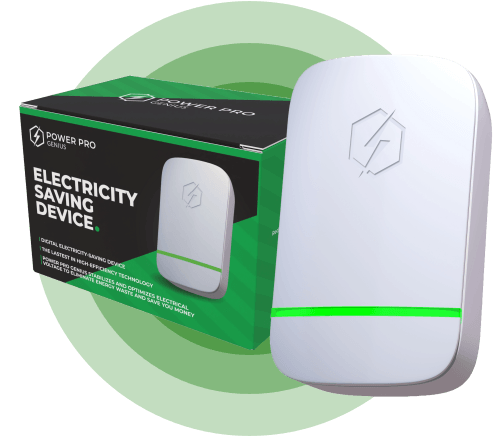
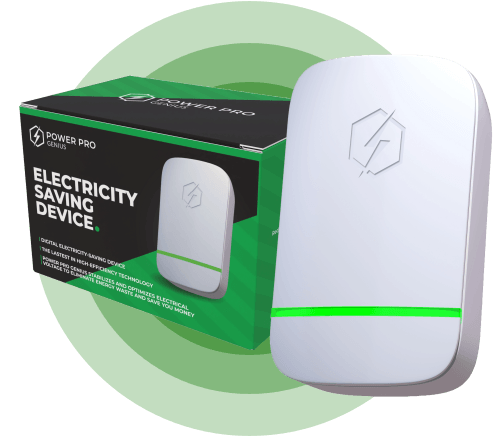
Power Pro Genius is marketed as a small plug-in device that supports more stable electricity flow and may help reduce unnecessary power waste.
The product requires no complicated installation. Users connect it to a standard indoor outlet and leave it running automatically.
But does that mean Power Pro Genius will dramatically reduce every electricity bill? Not necessarily.
Here is what you should know.
Power Pro Genius at a Glance
Product: Power Pro Genius Type: Plug-in electricity optimization device Installation: Plug-and-play Maintenance: Minimal Starting price: $49 Guarantee: 60 days
What Is Power Pro Genius?
Power Pro Genius is designed as a simple electricity-management device.
The manufacturer says it helps stabilize electrical current, filter unwanted interference, and provide additional protection against certain power fluctuations.
Its compact design allows users to install it without calling an electrician.
Once plugged in, the device is intended to work automatically.
What Are Its Main Functions?
Power Pro Genius is promoted around four main functions.
Voltage stabilization: It is designed to help manage fluctuations in electrical flow.
Electrical noise filtering: The device aims to reduce unwanted interference within the electrical system.
Surge management: It is promoted as providing additional protection against sudden electrical changes.
Energy optimization: By supporting smoother electrical flow, the manufacturer claims that the device may help limit unnecessary energy waste.
Is Power Pro Genius Easy to Use?
Yes, simplicity is one of the product’s strongest features.
There are no complicated controls.
Simply select an appropriate wall outlet, connect the device, and leave it operating.
An indicator light confirms that the unit is receiving power.
Can It Reduce Your Electricity Bill?
Power Pro Genius is marketed as an energy-saving product, but savings should not be treated as guaranteed.
Monthly electricity bills are affected by much more than electrical stability.
Weather, electricity prices, appliance usage, air conditioning, heating, number of household members, and daily habits can all influence your final bill.
For this reason, customers should compare actual electricity consumption in kilowatt-hours rather than comparing only the amount of money charged.
Expected Timeline
According to the supplied information, the manufacturer recommends giving Power Pro Genius several weeks to operate before evaluating the results.
Electricity-saving gadgets usually make one idea sound incredibly attractive:
Plug in a small device today and start paying less for electricity tomorrow.
Power Pro Genius falls into this increasingly popular category, but its explanation is more technical than simply claiming to “save power.”
The manufacturer says the device works with the electricity already flowing through your home by addressing things such as electrical fluctuations, harmonics, electrical noise, and reactive power.
Installation takes seconds.
The supplied promotional price starts at $44.10 for one unit.
At that price, the obvious question isn’t really whether the electrical terminology sounds impressive.
It’s:
Can Power Pro Genius save enough electricity to justify buying it?
That’s what this review focuses on.
Power Pro Genius Quick Review
Editor’s Rating: ★★★☆☆ 3.4/5
Price: From $44.10 in supplied promotion Type: Plug-in electricity optimization device Installation: Directly into indoor wall outlet Main Technology Claims: Current stabilization, capacitors, harmonic filtering and reactive-power compensation Wi-Fi: Not required App: None stated Maintenance: None stated Continuous Use: Yes, according to manufacturer Evaluation Period: Multiple billing cycles recommended Guarantee: 60 days advertised Biggest Advantage: Extremely easy installation Biggest Question: Whether it produces meaningful reductions in residential metered energy consumption
What Do You Actually Get for $44?
Power Pro Genius isn’t an electricity monitor.
It doesn’t show:
Today’s kWh usage.
Which appliance is wasting electricity.
Your current electricity cost.
Historical consumption.
Or recommendations for lowering your bill.
There’s no touchscreen or smartphone dashboard.
Instead, Power Pro Genius is designed to sit quietly in a wall outlet.
According to the manufacturer, internal components work continuously to stabilize electrical current, reduce harmonic disturbances and electrical noise, and provide localized reactive-power compensation.
A green indicator confirms that the unit is powered.
That’s essentially the ownership experience.
Why Power Pro Genius Sounds Convincing
Here’s where these products become interesting.
The terminology isn’t entirely imaginary.
Electrical systems really do experience:
Voltage fluctuations.
Harmonic distortion.
Reactive power.
Electrical noise.
Transient disturbances.
And changing loads.
Capacitors and power-factor correction are also established parts of electrical engineering.
So when a product mentions these things, it’s easy to conclude:
“The science is real, therefore the savings must be real.”
But that’s not necessarily true.
The supplied source makes an important distinction: these electrical principles unquestionably exist, but the real question is how effectively they’re implemented inside this particular compact residential device.
That’s exactly the question I’d ask too.
Does Power-Factor Correction Reduce a Home Electricity Bill?
This is one of the biggest issues buyers should understand.
Power-factor correction can be valuable in certain electrical systems.
Industrial and commercial customers can have billing structures where power factor, reactive demand, or peak demand matters financially.
Residential electricity customers are commonly billed primarily for the amount of real electrical energy consumed—kWh.
So improving an electrical characteristic somewhere in the circuit doesn’t automatically mean the household meter records dramatically fewer kilowatt-hours.
That’s why I wouldn’t assume that:
Better power factor = lower residential bill.
Whether Power Pro Genius materially changes billable consumption needs to be demonstrated through appropriate product-specific testing.
The supplied material doesn’t provide that level of independent evidence.
What About “Dirty Electricity”?
Power Pro Genius also talks extensively about dirty electricity.
Despite the dramatic-sounding name, there are genuine electrical phenomena behind the general concept.
Modern electronics can introduce:
Harmonics.
High-frequency noise.
Transient interference.
And waveform irregularities.
The supplied material acknowledges that “dirty electricity” is essentially broader consumer terminology often used when discussing these more technical power-quality issues.
Filtering unwanted electrical noise could be a legitimate engineering objective.
Suppose you pay the supplied promotional price of $44.10 for one Power Pro Genius.
How quickly does it pay for itself?
That depends entirely on actual savings.
For illustration only:
If it genuinely saved you $2 per month, recovering $44.10 would take about 22 months.
At $5 per month, it would take about 9 months.
At $10 per month, a little over 4 months.
But these are examples—not predictions of Power Pro Genius performance.
The supplied source contains manufacturer-published testimonials describing substantially larger monthly reductions, including amounts in the $30–$55 range.
I wouldn’t build a purchasing decision around those numbers.
Why?
Because testimonials don’t isolate the device from all the other variables affecting a home’s electricity bill.
Why “My Bill Dropped $35” Doesn’t Prove Much
Imagine you install Power Pro Genius on May 1.
April’s bill was $180.
May’s bill comes in at $145.
You saved $35.
It looks convincing.
Except perhaps May was cooler.
Your air conditioner ran less.
You went away for four days.
Your utility’s rate changed.
You charged your EV less often.
Your children spent a week somewhere else.
Or the billing periods contained different numbers of days.
This is why a simple before-and-after dollar comparison can be misleading.
The supplied material itself notes that weather, occupancy and appliance usage naturally affect monthly electricity consumption.
Here’s How I’d Actually Evaluate Power Pro Genius
Don’t start with the dollar amount.
Start with kWh consumption.
Before installation, record several electricity bills.
Look at:
Total kWh.
Number of billing days.
Average kWh per day.
Season.
Heating/cooling use.
Occupancy.
EV charging if applicable.
Major appliances used.
Then continue recording the same information after installation.
The most useful comparison would involve similar periods with reasonably comparable weather and household behavior.
Even then, an uncontrolled home comparison won’t have the rigor of laboratory testing.
But it’s far more informative than simply saying:
“My bill was cheaper this month, so the device works.”
Don’t Expect the Green Light to Prove Anything
When Power Pro Genius is plugged in, the supplied instructions say a green indicator illuminates.
That confirms the device is receiving electricity and has begun operating according to the manufacturer’s instructions.
It does not, by itself, demonstrate:
Energy savings.
Whole-home optimization.
Reduced harmonic distortion.
Lower reactive power.
Or appliance protection.
It’s an operating indicator—not an effectiveness measurement.
That’s worth remembering.
How Power Pro Genius Is Installed
One reason people may be attracted to this product is that setup is genuinely simple according to the supplied instructions.
1. Find an Appropriate Outlet
For a single unit, the manufacturer recommends a standard indoor wall outlet near the home’s main breaker panel where practical.
2. Plug It Directly Into the Wall
The manufacturer advises against using an extension cord, power strip, or plug-in surge protector.
3. Check the Indicator
The green light should illuminate.
4. Leave It Plugged In
Power Pro Genius is designed for continuous operation.
5. Track Your Electricity Usage
The manufacturer recommends evaluating performance over multiple billing cycles rather than expecting immediate changes.
How Long Before You Know If It’s Working?
This is another area where expectations matter.
The supplied material discusses approximately two to eight weeks before evaluating performance in one section.
Elsewhere, it recommends looking across two to four billing cycles.
Several billing cycles are certainly more useful for comparison than several days.
But time itself doesn’t establish effectiveness.
If you want to evaluate Power Pro Genius, keep records.
Otherwise, several months later you may simply be guessing whether anything changed.
Does Power Pro Genius Protect Appliances?
The manufacturer says internal capacitors and its stabilization technology can help reduce everyday electrical irregularities and create a more stable environment for appliances and electronics.
That’s another claim I’d keep separate from actual surge protection.
Power Pro Genius isn’t described as a substitute for equipment specifically designed to protect electronics from major surges.
So don’t remove proper surge protection because you’ve installed one of these devices.
Is Power Pro Genius Safe to Leave Plugged In?
This is an important question because the device is designed to operate 24/7.
The supplied material claims compatibility with residential electrical systems up to 250 volts, along with UL approval and RoHS compliance.
Those are manufacturer-stated claims in the supplied source.
For an electrical device intended to remain energized continuously, I’d verify the exact safety certification associated with the model you receive rather than relying solely on promotional copy.
Check the physical product for:
Model identification.
Electrical ratings.
Recognized certification markings.
Manufacturer details.
And safety instructions.
If the unit becomes unusually hot, smells burnt, shows physical damage, or behaves abnormally, disconnect it rather than continuing to use it.
Editor’s Verdict
★★★☆☆ 3.4/5
Power Pro Genius has two things going for it:
Simplicity and plausible electrical terminology.
You don’t need to rewire your house.
You don’t need an electrician according to the manufacturer’s setup instructions.
You don’t need an app.
And you don’t need to maintain it.
But none of those features answer the question buyers care about most:
Will it meaningfully reduce my metered electricity consumption?
That’s where I’d like stronger independent evidence.
The underlying concepts—capacitors, harmonics, reactive power and electrical stabilization—are real.
The uncertain part is how much a compact plug-in device changes billable household energy consumption in practice.
What We Liked
Simple plug-and-play setup
No wiring changes stated
No app required
No Wi-Fi
No batteries
No subscription stated
Maintenance-free operation claimed
Compact design
Designed for continuous operation
Multiple package sizes
60-day guarantee advertised
What We Question
No strong independent kWh-saving evidence supplied
Can provide data that helps homeowners change behavior.
Doesn’t necessarily alter the electrical characteristics of the circuit.
If your main question is:
“Where is all my electricity going?”
An energy monitor gives you more direct information.
If your interest is experimenting with power-quality optimization, Power Pro Genius belongs to a different category.
Power Pro Genius vs. a Surge Protector
They’re also not the same.
A surge protector is specifically designed to protect equipment against potentially damaging voltage surges within its rated capabilities.
Power Pro Genius is marketed primarily around continuous electrical optimization.
The supplied source explicitly says it shouldn’t be viewed as a replacement for conventional surge protection.
How Many Power Pro Genius Units Do You Need?
According to the manufacturer, quantity depends on home size and electrical layout.
The supplied material gives examples ranging from a single unit for smaller homes or apartments to multiple devices for larger properties with several electrical zones.
This creates an important buying consideration.
A $44 experiment is one thing.
Spending $100–$200 on several units is another.
Before buying multiple devices, I’d want stronger evidence that additional units produce measurable benefits in the particular electrical system involved.
Power Pro Genius Pricing
The supplied promotion lists:
1 Unit — $44.10
2 Units — $88.20 total
3 Units — $105.84 total
4 Units — $139.45 total
5 Units — $174.60 total
6 Units — $211.14 total
The listed per-unit prices vary across bundles.
Don’t automatically buy the largest package because the headline discount looks better.
Purchase quantity should be based on an actual need rather than simply maximizing a promotional percentage.
Check Power Pro Genius Price & Availability
60-Day Guarantee
The supplied material advertises a 60-day money-back guarantee.
That’s useful in principle because the manufacturer also says the product should be evaluated over time.
However, check the current return conditions before ordering.
In particular, find out whether:
Used units qualify.
All units in a bundle must be returned.
Return shipping is your responsibility.
Original shipping costs are refundable.
And the guarantee begins on the purchase, shipping, or delivery date.
Who Might Consider Power Pro Genius?
It may interest someone who:
Wants to experiment with household electricity optimization
Understands electrical savings aren’t guaranteed
Wants a simple plug-in design
Doesn’t want an app
Is willing to record actual kWh consumption
Has realistic expectations
Has confirmed electrical compatibility and safety certification
Understands it doesn’t replace proven energy-efficiency measures
Who Should Probably Skip It?
I’d be particularly cautious if you:
Expect 30–50% guaranteed savings
Think it produces free electricity
Want an instant reduction in your next bill
Need a proper surge protector
Want detailed energy-usage information
Have unsafe or outdated household wiring
Don’t intend to measure results
Would rather spend the money directly on established efficiency improvements
Frequently Asked Questions
What does Power Pro Genius do?
The manufacturer says it helps stabilize household electricity, filter electrical noise and harmonics, and provide reactive-power compensation.
Does Power Pro Genius generate electricity?
No.
It’s not described as a generator or alternative source of electricity.
Can Power Pro Genius lower electricity bills?
That’s one of the product’s main marketing objectives, but the supplied material doesn’t provide strong independent evidence establishing a predictable reduction in residential kWh consumption.
How much electricity can Power Pro Genius save?
I wouldn’t give a percentage based on the supplied evidence.
Household usage differs considerably, and customer testimonials aren’t sufficient to establish a reliable savings rate.
How quickly does Power Pro Genius work?
The device powers on immediately, but the manufacturer recommends evaluating results over several weeks or multiple billing cycles.
Should I compare my bills before and after?
Yes, but compare kWh consumption and billing days, not just the dollar total.
Does the green light mean Power Pro Genius is saving electricity?
No. It primarily indicates that the device is receiving power.
Does it require Wi-Fi?
No Wi-Fi setup is described.
Is there a Power Pro Genius app?
No app is described in the supplied material.
Does it require an electrician?
The manufacturer describes it as a plug-in product requiring no electrical modifications.
Can I use it on a power strip?
The supplied instructions recommend plugging it directly into a wall outlet.
Does Power Pro Genius replace surge protection?
No.
Can I use it in an apartment?
The manufacturer says it can be used in apartments, condominiums, rental properties and other compatible residential buildings.
Does it work with solar?
The manufacturer claims compatibility with grid-connected and off-grid residential solar systems.
Is Power Pro Genius UL approved?
The supplied material claims UL approval. I’d verify the exact model’s listing/certification independently.
How much does Power Pro Genius cost?
The supplied promotional price begins at $44.10 for one unit.
Is Power Pro Genius a scam?
The supplied information describes an identifiable physical product, its installation, pricing, compatibility and manufacturer-stated technologies.
That establishes what is being sold.
It doesn’t establish that the electricity-saving outcome is independently proven.
So the more useful question isn’t simply whether the gadget exists.
It’s:
Does independent testing show that Power Pro Genius produces enough measurable kWh reduction to justify its cost?
The supplied material doesn’t answer that conclusively.
Is Power Pro Genius Worth $44.10?
That depends on what you’re expecting from your $44.
If you’re buying Power Pro Genius because an advertisement convinced you that one tiny plug-in box will dramatically slash your electricity bill, I’d lower those expectations.
If you’re interested in experimenting with a low-maintenance electrical optimization device and you’re willing to measure actual kWh consumption carefully, the proposition is different.
The device is certainly easy to use.
The engineering concepts referenced in its marketing are real.
What remains uncertain from the supplied information is the size of the practical residential energy-saving effect.
For me, that’s why Power Pro Genius lands at:
Editor’s Rating: 3.4/5
Interesting concept.
Very easy installation.
But stronger independent evidence of actual household kWh savings would make the buying case considerably more convincing.
Check Current Power Pro Genius Offer
Individual household electricity consumption varies. Promotional claims and customer testimonials shouldn’t be treated as guaranteed utility-bill savings.